
Curriculum for Certificate Nursing in Uganda: An overview of the modules!


In Uganda, the curriculum for certificate in nursing course takes only two and half years, which is equal to five semesters. Students understaking this program are expected to complete certificate nursing curriculum as guided by the professional institutions governing this profession. In this brief article, we explore and list for you all the course modules in the curriculum. Download the detailed curriculum here:
NB: Remember, you can have all the notes for each of the following modules by visiting the courses page here. Thank you.
Curriculum Overview for Certificate in Nursing Students
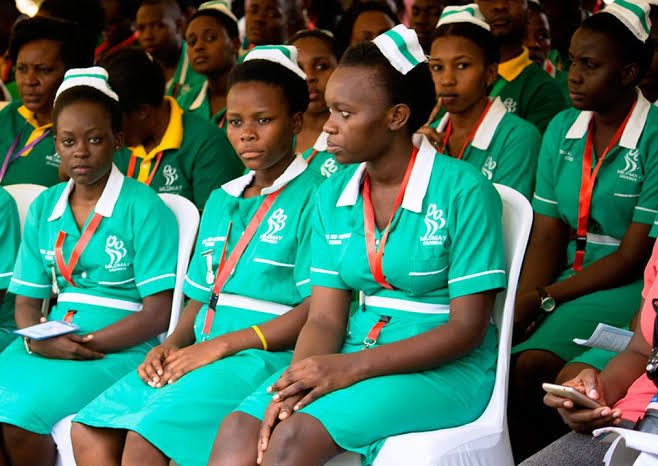
The Certificate in Nursing curriculum is a competence-based education and training (CBET) program designed to equip learners with the necessary skills to work in health facilities with minimum supervision. This academic program, spanning two and a half (2½) years, ensures graduates acquire basic nursing skills in areas such as Medical Nursing, Surgical Nursing, Community Health, and Maternal and Child Health. Explore the modules as organized according to the year and semester:
Year 1, Semester I modules
Learners cover the following module units:
1. Foundations of Nursing (I): This module unit covers ethical standards, infection prevention and control, basic nursing care, taking vital observations, bed making, and patient hygiene practices.
2. Anatomy and Physiology (I): Students are introduced to the anatomy and physiology of the human body, specifically covering the skeletal, muscular, circulatory, and digestive systems.
3. First Aid and Emergencies: This unit introduces concepts, principles, aims, rules, and guidelines for performing first aid in life-threatening situations such as shock, cardiac arrest, wounds, epilepsy, and haemorrhage.
4. Microbiology: Students learn about the classification and characteristics of microorganisms, their role in spreading infection and disease, simple microbial laboratory tests, immunity, and immunization.
5. Personal and Communal Health: This unit covers elements of personal health, principles of maintaining a healthy environment, and hygiene practices necessary for health promotion and proper sanitation.
Year 1, Semester II modules
Learners cover the following module units:
1. Foundations of Nursing (II): Content includes specialized nursing care, bandaging injured parts of the body, applying the nursing process to patient management, administration of prescribed medicines, and patient admission, transfer, and discharge.
2. Anatomy and Physiology (II): This unit covers the anatomy and physiology of the Respiratory, Urinary, Reproductive, Nervous, and Endocrine systems, as well as the organs of special senses.
3. Sociology and Psychology: This module unit introduces socio-cultural and psychological factors influencing individual behavior in relation to illness, and how to apply these concepts to reinforce positive health-seeking practices and adherence to treatment regimes. Sociology notes here and psychology notes here.
4. Introduction to Essential Computer Concepts in Nursing: Students interface with computers, learn common computer packages (like Microsoft Office), and utilize the internet and email for correspondence and research relevant to nursing processes.
5. Primary Health Care (PHC): This unit emphasizes the Certificate Nurse’s role in promoting community health, carrying out community sensitizations, and participating in immunization and family planning campaigns, focusing on the pillars of PHC implementation.
Year 2, Semester I modules
Learners cover the following module units:
1. Pharmacology (I): This introductory module covers terms and concepts in medicine administration, the Essential Drugs List, medicine classifications, proper drug storage, and the legal aspects outlined in the Uganda Pharmacy and Drug Legislation.
2. Medical Nursing (I): This unit covers introductory medical nursing, the management of diseases related to the circulatory, respiratory, and hematologic systems.
3. Surgical Nursing (I): Content includes introduction to surgical nursing, common surgical conditions, pre- and post-operative nursing management, aseptic techniques, and natural body defense mechanisms.
4. Paediatric Nursing (I): This unit focuses on principles of paediatrics, normal child growth and development, nutritional needs and assessment, congenital abnormalities, and the management of a sick newborn.
5. Gynaecological Nursing: This module unit covers the structure and functions of the female reproductive organs, common gynaecological conditions (e.g., menstruation disorders, abortion, ectopic pregnancy), their management, and preventive measures.
6. Field Placement (Hospital/Community): A mandatory field placement activity is scheduled for the end of this semester.
Year 2, Semester II modules
Learners cover the following module units:
1. Pharmacology (II): This module unit describes specific antimicrobial agents (e.g., antibiotics, ARVs) and medicines acting on specific body systems (e.g., cardiovascular, respiratory, gastrointestinal, endocrine).
2. Medical Nursing (II): This module focuses on conditions and nursing care related to the digestive, urinary, central nervous, endocrine, and musculoskeletal systems.
3. Surgical Nursing (II): This unit provides knowledge and skills for managing surgical conditions of the head, neck, chest, abdominal cavity, ano-rectal, and genital urinary systems.
4. Mental Health Nursing: Students are introduced to the concept of Mental Health, common mental health conditions, psychiatric nursing interventions, and emergencies, covering topics like etiological factors, assessment, and counseling.
5. Occupational Health and Safety: This module unit focuses on maintaining a safe work environment, prevention of occupational hazards, and the role of the nurse in educating others and treating/referring injured workers.
6. Paediatric Nursing (II): This module unit covers the management of paediatric conditions, including application of the Integrated Management of Childhood Illnesses (IMCI) approach, and managing children with HIV/AIDS and domestic accidents.
7. Field Placement (Hospital/Community): A mandatory field placement activity is scheduled for the end of this semester.
Year 3, Semester I modules
Learners cover the following module units:
1. Tropical Medicine: Major focus is on providing nursing care to patients affected by tropical/communicable diseases (e.g., Malaria, Typhoid, Ebola, Measles), describing their causes and symptoms, and implementing preventive measures.
2. Guidance and Counseling: Students acquire knowledge and skills to provide guidance and counseling to various groups, covering counseling procedure and techniques, communication methods, and ethical codes.
3. Surgical Nursing (III): This unit provides knowledge and skills in the management of conditions related to the ear, nose, and throat (ENT), dental, oral, and eye, and provides instruction on palliative care for terminally ill patients.
4. Reproductive Health: This unit covers the management of integrated reproductive health services, including family planning, Sexually Transmitted Infections (STIs), adolescent reproductive health services, post-abortal care, and the emergency management of the 2nd and 3rd stages of labour.
5. Health Service Management: Students gain skills in managing health services, including the Uganda National Health Care System, Human Resource Management, Ward Management, Communication, Customer Care, and Public Relations.
6. Entrepreneurship: This unit exposes students to entrepreneurship concepts, the characteristics of an entrepreneur, financial management, and the importance of preparing work plans and budgets for sustainable unit operation.
Curriculum Summary for certificate nursing:
Below is a list of the modules in summary:
Certificate in Nursing and Midwifery
Year 1 – Semester 1
- Anatomy and Physiology 1
- First Aid
- Foundations of Nursing 1
- Microbiology
- Personal and Community Health
- Practicals
Year 1 – Semester 2
- Anatomy and Physiology 2
- Foundations of Nursing 2
- Sociology and Psychology
- Computer
- PHC
- Practicals
Year 2 – Semester 1
- Introduction to Medical Nursing
- Introduction to Pharmacology
- Surgical Nursing 1
- Gynecology Nursing
- Paediatric Nursing 1
- Palliative Care
- Practicals
Year 2 – Semester 2
- Medical Nursing 2
- Pharmacology 2
- Surgical Nursing 2
- Mental Health Nursing
- Occupational Health
- Practicals
Year 3 – Semester 1
- Tropical or Communicable Diseases
- Surgical Nursing 3
- Reproductive Health
- Guidance and Counselling
- Health Service Management
- Entrepreneurship
- Practicals
NB: Remember, you can have all the notes for each of the following modules by visiting the courses page here. Thank you.




Responses